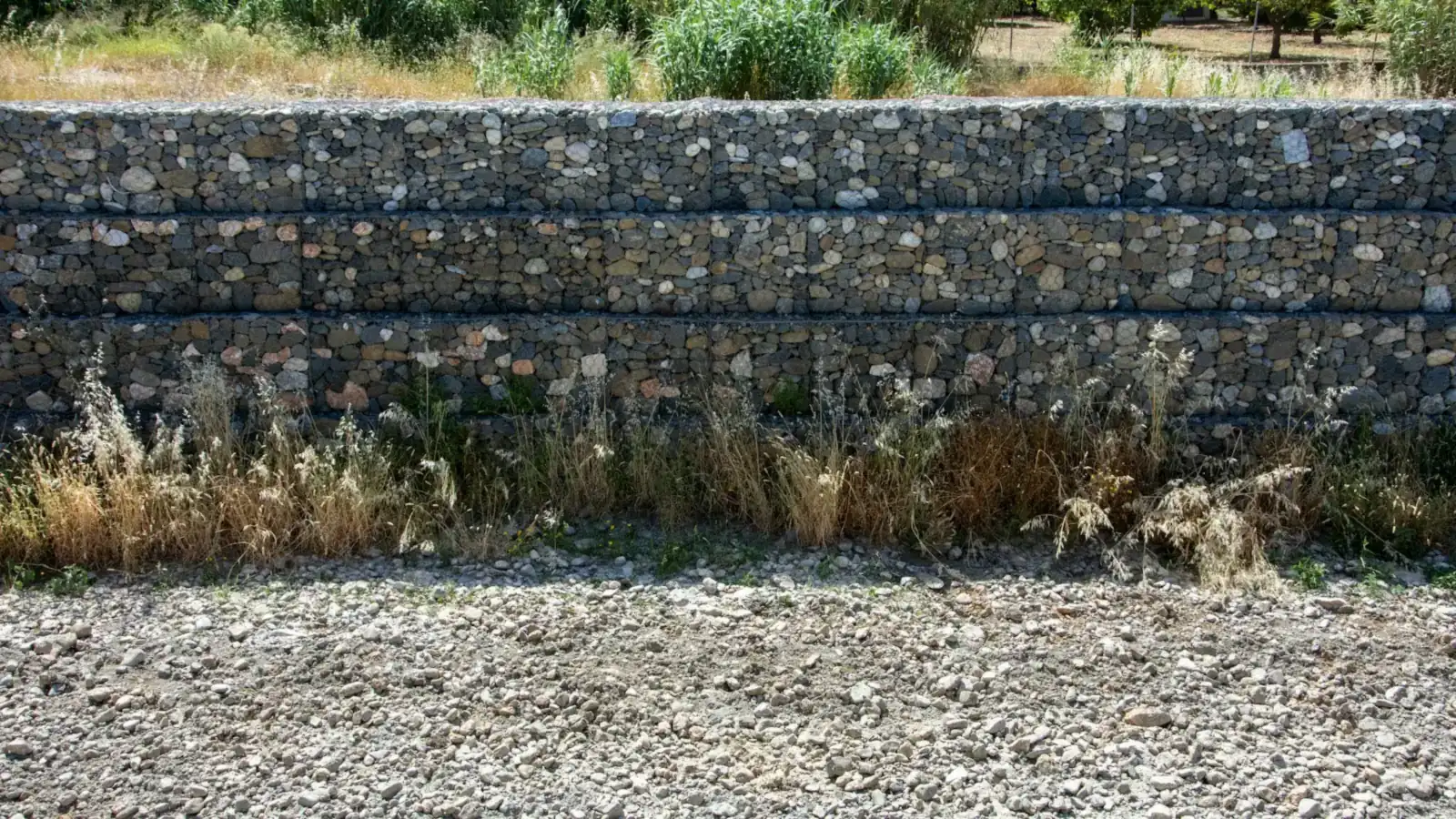
We build retaining walls in Temescal Valley, CA for hillside lots in communities such as Sycamore Creek, Trilogy at Glen Ivy, The Retreat, Wildrose Ranch and Terramor. Temescal Valley is an unincorporated area, so permits come from Riverside County, not the City of Corona, and nearly every lot is also under HOA design review. We plan every wall for both: the County’s TLMA block wall permit program and your HOA’s architectural guidelines.
County permits, not Corona
This is the first thing we tell Temescal Valley homeowners, because it trips people up. Temescal Valley has a Corona mailing address in places, but it has no city government. Building permits are issued by Riverside County Transportation and Land Management Agency (TLMA) Building & Safety. The County publishes standard designs for garden walls, retaining walls and block walls on top of short retaining walls, with inspections at footings, forms and steel, bond beam, grout, wall drain and final. The County notes that its standard designs are only good for walls up to 6 feet; anything taller needs an engineered design submitted to the County. When a wall needs engineering, the plans come from a registered civil engineer and we build to them.
Hillside lots in a narrow canyon
Temescal Valley is a narrow canyon running along Interstate 15 between the Santa Ana Mountains on the west and the Gavilan Hills on the east. Communities were built on cut-and-fill pads with tall manufactured slopes. Many homes back onto slopes that climb toward the Cleveland National Forest or drop toward Temescal Canyon Road. That setting brings a familiar list of needs:
- Walls that gain usable flat yard at the toe of a rear slope.
- Terraces that turn a steep slope into planted tiers.
- Walls and drainage that protect pools and patios from slope runoff.
- Repair of walls and slopes after heavy winter storms.
- Protection against debris flow from burn scars above the valley after fires.
Communities we work in
We work across the valley, from Sycamore Creek near Indian Truck Trail to Trilogy at Glen Ivy and The Retreat further north, and in Wildrose Ranch, Terramor and the Dawson Canyon area. Each community has its own HOA and its own design guidelines. Trilogy, for example, is an active-adult community with its own review process, while newer neighborhoods such as Terramor have detailed landscape and hardscape palettes. We prepare drawings, material and color samples for your HOA submittal and wait for written approval before we build.
Wall types that work here
Most Temescal Valley walls are reinforced CMU block finished to match the HOA palette, usually with stucco or a split-face or stone-veneer face. For tall cuts or walls near structures, engineered walls are common. For broad rear slopes, a set of terraces often works better than one tall wall, and our slope stabilization page explains how walls, drainage and planting work together.
Drainage and debris flow
Water moves fast down Temescal Valley slopes in winter, and burn scars above the valley increase the risk of mud and debris flows after fires. Good drainage is essential: drain rock and pipe behind every wall, brow ditches at the top of slopes, and outlets that do not concentrate water onto neighboring lots. If your lot backs onto a burned area, getting drainage and erosion control in place before the rainy season is the priority.
Glen Ivy and the canyon
The valley’s best-known landmark is Glen Ivy Hot Springs, tucked against the mountains, and many homes in Trilogy at Glen Ivy enjoy views toward the same slopes. Those views come with steep rear yards. The County’s Temescal Canyon Area Plan describes the valley’s land use, open space and hillside policies, which shape how lots here were graded and why walls are so common.
Soils
Valley soils include alluvium along the canyon floor and weathered granitic rock and colluvium on the slopes, plus engineered fill on graded pads. Soil conditions can change from one end of a lot to the other, so tall walls usually start with a soils report. For smaller walls, we look closely at what we find during excavation and adjust drainage and backfill accordingly.
Housing stock and typical wall heights
Most Temescal Valley homes were built from the early 2000s onward, so walls here are generally newer than in central Corona. The problems we see are less about age and more about setting: rear slopes that shed more water than expected, pads where a pool or patio was added near the top of a slope, and side yards where a few feet of grade change was left as a bare bank. Many projects are walls of moderate height that fit within the County standard designs, while tall cuts behind homes and walls near structures move into engineered design. Either way, the County inspection list includes the wall drain, which tells you how seriously drainage is taken here.
Fire season and storm season
Temescal Valley sits beneath wildland slopes, so fire season and storm season are linked. After a fire on the slopes above, the first winters bring a higher risk of erosion and debris flow. Masonry and concrete walls are noncombustible, which matters on lots near open space, and wall drainage plus brow ditches help manage the runoff that follows.
Getting started
- Site visit. We measure the slope, note drainage and access, and discuss your goals.
- HOA submittal. We help prepare drawings and samples for architectural review.
- County permit. We use a County standard design where it fits, or the engineer’s plans where it does not.
- Build and inspect. Footings, bond beam, grout, wall drain and final inspections happen as the County requires.
Neighboring areas
Temescal Valley sits between Corona and Lake Elsinore along I-15. If you are further south, see retaining walls in Lake Elsinore, or browse all of our service areas. For County information, see the County of Riverside website.
Frequently asked questions
Who issues retaining wall permits in Temescal Valley?
Riverside County TLMA Building & Safety issues permits in Temescal Valley, because it is unincorporated and has no city government. The City of Corona does not permit walls here, even where addresses say Corona.
Does my Temescal Valley HOA have to approve a retaining wall?
Almost certainly, yes. Communities such as Sycamore Creek, Trilogy at Glen Ivy, The Retreat and Terramor have architectural review, and written approval is usually required before you build. We help prepare the drawings and samples.
Can a County standard design be used for my wall?
Often, for walls within the County standard designs, which the County says are good up to 6 feet. Taller walls, or walls with loads the standard does not cover, need an engineered design submitted to the County.