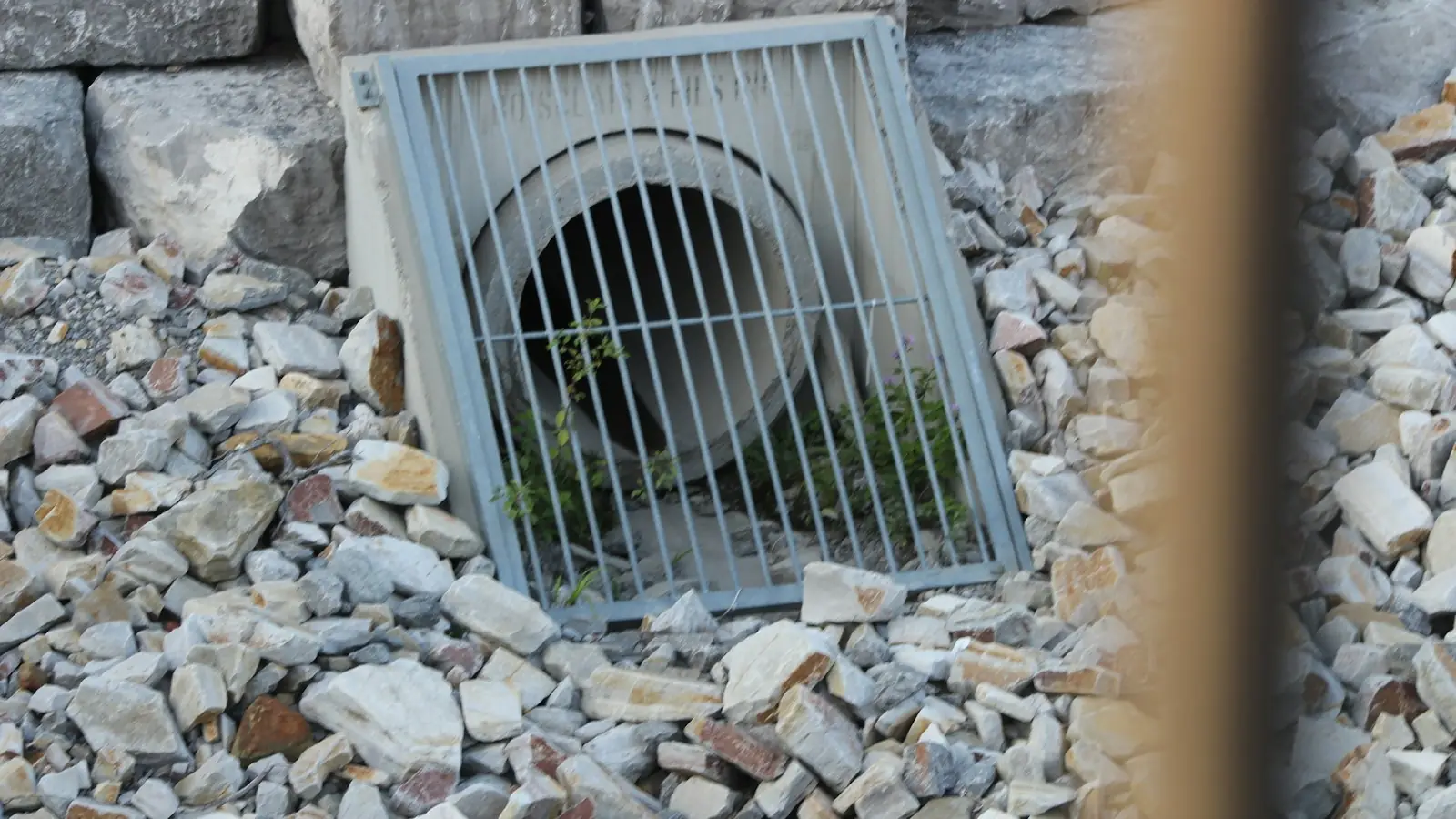
Retaining wall drainage is the system of drain rock, perforated pipe, filter fabric, weep holes and outlets that lets water escape from behind a wall instead of building up pressure against it. Trapped water is the most common reason walls in Corona lean, crack or fail, so we treat drainage as part of the structure. The City’s standard detail itself calls for weep holes or a perforated pipe to daylight, plus drain rock behind taller walls, and says walls must not block or concentrate lot drainage.
Why water is a wall’s worst enemy
Soil pushes on a retaining wall even when it is dry. When it gets wet, two things happen. The soil gets heavier, and water fills the spaces between soil grains and pushes on the wall as well. That added hydrostatic pressure can be far more than the wall was designed to resist. Clay soils make it worse: they hold water, drain slowly and swell when wet. Corona soils change lot to lot, from sandy alluvium on the valley floor to clay pockets and weathered rock on hillside lots, so we never assume the backfill will drain on its own.
Winter storms also move a lot of water. Runoff from the Santa Ana Mountains and Corona’s hillside tracts heads toward Temescal Wash, which the Riverside County Flood Control District channelized through Corona after the 1969 floods, finishing in January 1987 according to the district’s history. Your yard is a small piece of that system, and a wall that blocks or concentrates runoff can cause trouble for you and your neighbors.
The parts of a good drainage system
- Drain rock: a column of clean, washed gravel directly behind the wall so water can move down freely.
- Filter fabric: where needed, a geotextile between the drain rock and native soil so fine soil does not clog the rock.
- Perforated pipe (French drain): a pipe at the base of the wall, holes positioned to collect water, sloped to carry it to an outlet.
- Weep holes: openings through the base of a block wall that let water out through the face. Corona’s standard detail allows open head joints or weep holes at 6 feet on center, or a 3-inch perforated pipe draining to daylight.
- Outlets: a planned place for the water to go, such as daylight on a slope, a curb outlet or an approved drain line.
- Surface drainage: a swale or concrete V-ditch above the wall that catches runoff before it soaks into the backfill.
New walls: drainage built in
On every new wall we build, drainage goes in as the wall rises. We place pipe at the base, drain rock behind the wall, and compact the backfill in lifts. We grade the top so surface water moves away from the wall. Manufacturers publish good guidance on this, for example the Allan Block guide to proper water management, and the City’s standard retaining wall detail sets the minimum for block walls.
Existing walls: drainage retrofits
Many walls that are starting to lean or weep were built with little or no drainage. If the wall is still structurally sound, adding drainage can stop the problem before it becomes a rebuild. A retrofit usually means:
- Excavating behind the wall in sections, keeping the wall stable as we go.
- Installing filter fabric, drain rock and a perforated pipe at the base.
- Opening or adding weep holes, or adding an outlet through the wall.
- Routing the pipe to a safe outlet and restoring the surface with a swale where helpful.
If the wall has already moved significantly, drainage alone will not fix it. Our retaining wall repair page explains how we decide between repair and replacement.
Yard drainage beyond the wall
Sometimes the wall is fine and the problem is the yard: roof downspouts dumping next to the wall, sprinklers soaking the backfill, a pool overflow or a neighbor’s slope draining toward you. We look at the whole picture, redirect downspouts into pipe, adjust grades and add area drains where needed. On larger slopes, drainage works together with walls and planting, covered on our slope stabilization page.
Signs your drainage is not working
- Weep holes that never drip, even after a heavy storm.
- Water pooling at the base of the wall or seeping through joints.
- White mineral stains (efflorescence) on the wall face.
- Soggy soil behind the wall days after rain.
- Soil washing through the face or out of weep holes.
Our guide on why retaining walls fail explains how drainage problems lead to failure.
Corona neighborhoods and nearby cities
River-bottom lots near Santana Regional Park sit close to the Santa Ana River and its sandy soils, while hillside lots below the Skyline ridge shed fast runoff. Both need drainage planned for their setting. Nearby, retaining walls in Eastvale are often low walls between flat pads where drainage between lots is the main issue, and retaining walls in Lake Elsinore hold back steep hillside slopes where storm runoff is heavy.
Estimates
Drainage pricing depends on wall length, depth to the base, access, how much soil must be removed and replaced, and the outlet route. We give a written estimate after we look at the wall and where the water goes.
Frequently asked questions
Why does a retaining wall need drainage?
Water trapped behind a wall adds pressure that the wall was never designed for, and that pressure is the most common reason walls lean, crack or fail. Wet soil is also heavier and clay swells. Drain rock, pipe and weep holes let water out before it builds up.
What is a French drain behind a retaining wall?
It is a perforated pipe in a trench of clean drain rock, usually wrapped in filter fabric, that collects water behind the wall and carries it to a safe outlet. The pipe runs along the base of the wall and slopes toward daylight or an approved drain line.
What are weep holes, and should they drip?
Weep holes are small openings near the base of a wall that let water out, and seeing them drip after rain means the drainage is working. Weep holes that stay dry after a big storm, or that push out mud, may be clogged and worth checking.
Can you add drainage to an existing wall?
Often yes, by excavating behind the wall, installing drain rock and pipe, and adding outlets, as long as the wall itself is still sound. If the wall has already rotated or cracked badly, drainage alone will not save it, and a repair or rebuild may be needed.