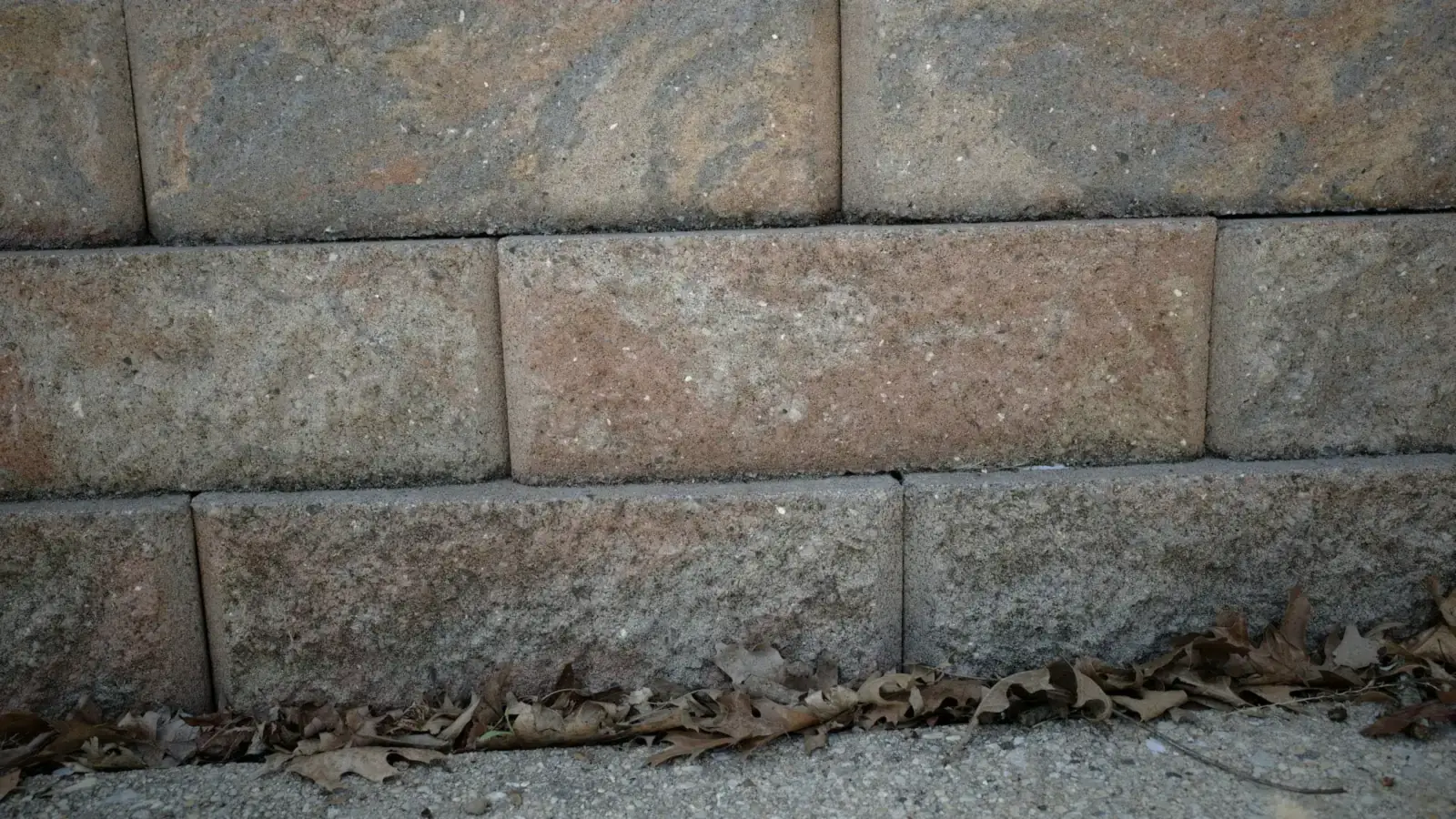
Retaining wall repair starts with finding out why the wall is leaning, bulging, cracking or washing out, because the cause decides whether the wall can be fixed or has to be rebuilt. In Corona, the cause is usually water trapped behind the wall, often combined with clay backfill, a footing that was too small, or extra load on top. Structural repairs to walls over 2 feet tall, or walls holding back a surcharge, need a City permit just like a new wall.
Signs your wall needs attention
- Leaning or rotating outward at the top, even slightly.
- Bulging in the middle of a block or stone wall.
- Cracks, especially horizontal cracks or stair-step cracks through mortar joints.
- Soil washing out at the base or through joints after rain.
- Weep holes that never drain, or wet stains and efflorescence on the face long after storms.
- Gaps opening between the wall and the soil or patio at the top.
- Sinking or broken caps and pilasters that have pulled away.
If you see any of these, take photos with a tape measure in the frame and note the date. Comparing photos a few weeks apart shows whether the wall is still moving. Our guide to retaining wall warning signs explains what each symptom usually means.
How we assess a failing wall
- Measure movement. We check plumb along the wall, measure crack widths and look for patterns that point to footing rotation, sliding or bending.
- Find the water. We look at roof downspouts, irrigation, pool overflow, neighboring yards and slope runoff, and check whether weep holes or drains are present and working.
- Look at the build. Where possible we expose a section to see the footing, whether the cells are grouted and reinforced, and what the backfill is.
- Check what is above. Driveways, sheds, pools, block fences and new landscaping can all add loads the wall was never built for.
Then we tell you plainly what we found and what we recommend. If the wall is tall, holds back a lot of soil, or is near a structure, we will recommend an engineer’s evaluation before work begins.
Repair options
Drainage retrofit
If the wall itself is sound but water is building up behind it, we excavate behind the wall, install drain rock and perforated pipe, add or clear weep holes and route the water to a safe outlet. This is often the most cost-effective fix. See retaining wall drainage for details.
Partial rebuild
When one section has failed and the rest is sound, we can sometimes remove and rebuild that section on a new footing, tying it to the existing wall and correcting the drainage that caused the failure.
Full replacement
A wall that is rotating on a failed footing, was built without steel or grout, or has moved too far is usually best replaced. We remove the old wall, haul off debris and build a new reinforced block wall or engineered wall designed for today’s loads and drainage.
What we do not do
We do not hide a structural problem with a coat of stucco or by filling cracks and walking away. Patching a moving wall only delays the failure and usually makes it more expensive. We also do not recommend pushing a leaning wall back with jacks or pulling it with cables unless an engineer designs that solution for the specific wall.
Repairs in Corona neighborhoods
Older walls in the streets around the Historic Civic Center and along Grand Boulevard often predate modern drainage details. In the 1980s to 2000s hillside tracts of South Corona and Sierra Del Oro, many walls hold back manufactured slopes that send a lot of water downhill each winter. Near Santana Regional Park and the river bottom, groundwater and sandy soils create their own issues. Each of these settings points to a different likely cause, which is why we assess before we quote.
Permits, neighbors and insurance
Corona’s code requires a permit to alter or repair a retaining wall over 2 feet tall, or one that holds back a surcharge, so most structural repairs need one. If the wall sits on a property line, talk with your neighbor early; responsibility can depend on who changed the grade or drainage and who maintains the wall. Many homeowners policies exclude earth movement, so check your policy before assuming coverage. Before hiring anyone for repair work, look up the contractor in the California CSLB Check A License tool.
Wall repair in nearby cities
We repair walls throughout the area. For retaining walls in Ontario we often see older garden walls in central neighborhoods that need repair or replacement. For retaining walls in Chino the work is often pad-to-pad walls and drainage fixes on flat lots. Those cities have their own building departments and rules.
Getting a repair estimate
Send us photos of the wall, the area above it and any cracks with a tape measure for scale, plus the approximate height and length. We will follow up to schedule a site visit and give you a written estimate that explains the cause, the fix and any permit or engineering steps.
Frequently asked questions
Can a leaning retaining wall be repaired, or does it need replacing?
It depends on the cause and how far the wall has moved: minor cracking and blocked drainage can often be repaired, but a wall that is rotating or has a failed footing usually needs to be rebuilt. We measure the movement and look at the footing, steel and drainage before recommending either path.
What are the warning signs of a failing retaining wall?
Watch for leaning or bulging, horizontal or stair-step cracks, soil washing out at the base, wet stains or weep holes that never drain, and gaps opening at the top. Photograph these with a tape measure for scale and compare over a few weeks to see whether the wall is still moving.
Do retaining wall repairs need a permit in Corona?
Corona’s code requires a permit to alter or repair a retaining wall over 2 feet tall, or one that holds back a surcharge, so most structural repairs need one. Cosmetic work such as repainting usually does not. We confirm the permit path as part of the estimate.
Will homeowners insurance pay for a collapsed retaining wall?
Often not, because many policies exclude earth movement, so check your policy and ask your insurer before assuming coverage. Documenting the wall’s condition with dated photos helps whatever your coverage is. We can provide a written description of what we found for your records.