For most Corona slopes, reinforced CMU block is the best all-round retaining wall material, poured concrete is best for tall or heavily loaded walls, segmental block is best for curves and terraces, and natural stone is best for low to moderate walls on natural-looking hillsides. Timber is the cheapest up front but the weakest long-term choice. The right answer depends on height, load, space, look and budget.
Reinforced CMU block
What it is: hollow concrete blocks with steel bars and grout, on a poured footing. See block retaining walls.
- Height: works for low walls up to tall engineered walls. Corona’s standard detail covers block walls up to 5 feet 4 inches.
- Space: vertical face and compact footing, good near property lines.
- Look: stucco, paint, split-face or stone veneer.
- Lifespan: decades when drained and reinforced properly.
- Fire: noncombustible.
- Best for: most rear and side yard walls, combo walls with a block fence on top.
Poured concrete
What it is: cast-in-place reinforced concrete on an engineered footing. See concrete retaining walls.
- Height: tall cuts and heavily loaded walls.
- Space: vertical, can be thin for its strength.
- Look: board-formed, colored, stucco or veneer.
- Cost: typically the highest per foot, plus engineering.
- Best for: walls next to driveways or structures, tall hillside cuts.
Segmental (interlocking) block
What it is: dry-stacked interlocking units held by weight and, on taller walls, geogrid. See segmental retaining walls.
- Height: low to moderate; taller walls need geogrid and design.
- Space: needs room behind for drain rock and geogrid.
- Look: textured faces and earthy colors, easy curves.
- Best for: garden terraces, curved walls, areas without a concrete pump.
Manufacturers such as Allan Block publish design charts for their systems.
Natural stone and boulders
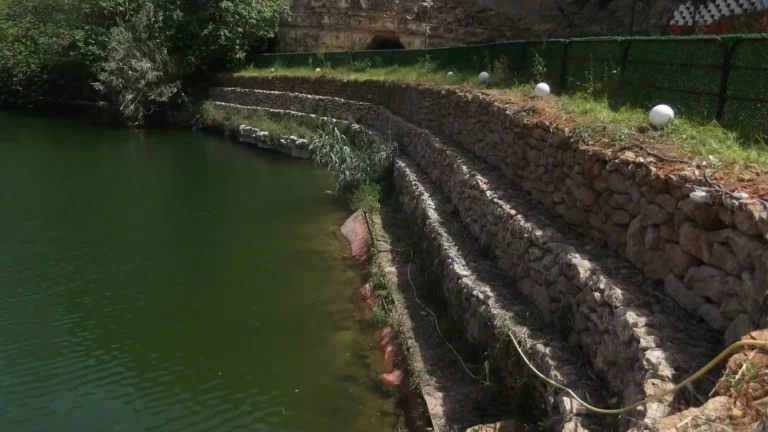
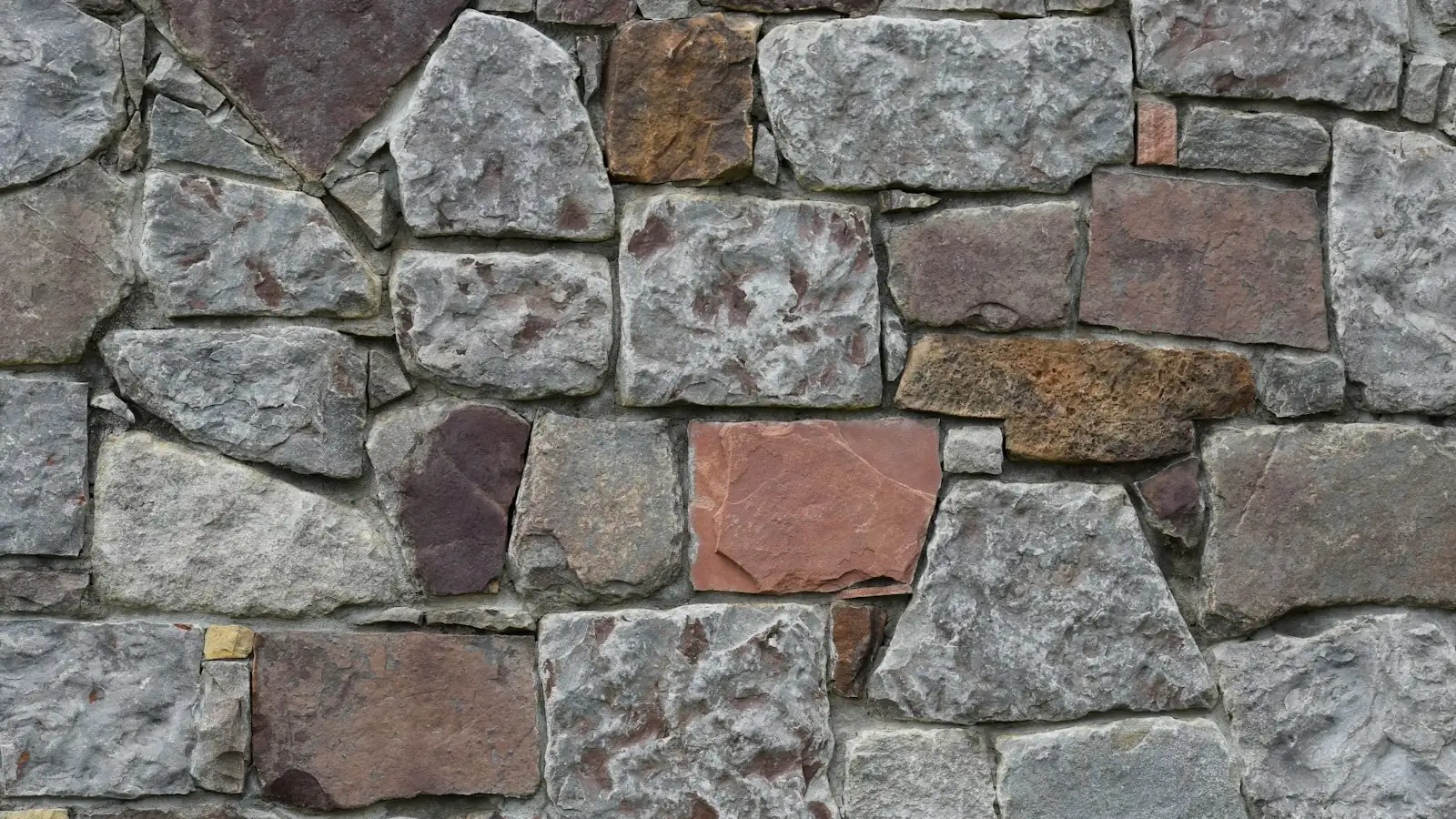
What it is: boulders or fitted stones, or stone veneer on a structural wall. See stone retaining walls.
- Height: boulder and dry-stack walls work best for low to moderate heights.
- Space: takes more depth than a vertical wall.
- Look: natural, blends with Corona’s foothills.
- Fire: noncombustible.
- Best for: hillside landscapes, natural-looking terraces.
Timber
Timber walls are cheap and quick, but they rot, attract termites in clay soils, burn in fire zones and are not used for engineered retention. For permanent walls on Corona lots, we do not recommend them.
Comparison at a glance
| Factor | CMU block | Concrete | Segmental | Stone |
|---|---|---|---|---|
| Typical height | Low to tall | Tall/loaded | Low to moderate | Low to moderate |
| Space behind | Small | Small | Larger | Larger |
| Curves | Possible | Possible | Easy | Easy |
| Fence on top | Yes | Yes | Rarely | No |
| Fire | Noncombustible | Noncombustible | Noncombustible | Noncombustible |
How to decide for your lot
Start with three questions. First, how tall is the grade change, and what sits above it? A tall cut with a driveway above points to engineered block or concrete, while a gentle slope in a garden points to segmental or stone. Second, how much room is there behind the wall? Segmental walls with geogrid and boulder walls need depth; a wall tight to a property line usually needs to be block or concrete. Third, what look do you want, and what will your HOA approve? A stucco finish that matches the house, a split-face texture or a natural boulder face each suit different homes.
Cost follows from those answers. In general, segmental and block walls are the most economical for typical residential heights, boulder walls vary with stone and access, and poured concrete costs the most per foot. Our retaining wall cost guide explains the factors in more detail.
Permits apply to every material
Corona’s permit rule does not care what the wall is made of. A wall over 2 feet from the top of its footing, or any wall with a surcharge, needs a permit. See our permit guide.
Drainage applies to every material
No material survives trapped water forever. Whatever you choose, drain rock, pipe or weep holes and an outlet are essential. See why retaining walls fail.
Matching the neighborhood
In HOA communities such as Dos Lagos, near The Shops at Dos Lagos, the HOA palette may decide the finish. Block with stucco or stone veneer often satisfies those palettes while keeping the structure simple.
Frequently asked questions
What is the longest-lasting retaining wall material?
Properly reinforced, well-drained block and concrete walls last for decades, as do well-built stone walls. Drainage and design matter more than material in how long any wall lasts.
Can I mix materials, like block with stone veneer?
Yes. A reinforced block or concrete wall with stone veneer gives you a stone look with a structural core, which is common on taller walls and HOA lots.
Which material is best for a fire zone?
Block, concrete and stone are all noncombustible and suit Fire Hazard Severity Zones. Timber walls burn and are a poor choice near brush.